
Covering this project, I was featured by name and title in the three leading furniture industry publications:



Excerpts from AICO leadership in coverage:
"This isn't just a website redesign — it's our digital evolution. We've created a platform that... positions us at the forefront of technological advancement in the industry."
Michael Amini
Founder & CEO, AICO
"We've engineered this platform to grow with us and our industry."
David Koehler
President, AICO
AICO needed to modernize their integrated website platform. The platform facilitates approximately $24M in annual B2B sales through dealer networks, but the client-facing interface needed modernization and the internal integrations needed the ability to adapt to emerging technology in the furniture industry. Managing thousands of SKUs through a backend server meant any updates required the same server-dependent process, creating operational constraints from the start.
As AICO's Solutions Architect, I led alignment across IT, Sales, Marketing, Operations, and Executive departments, applying stakeholder management, system integration, analytical, and architectural design skills to navigate constraints and deliver a complete solution. My analysis and research spanned integration mapping, top-down stakeholder interviews, performance testing, and surveys across multiple user groups.
The technical challenge involved designing integration patterns between outdated ASP-based code, the modernized code, and the backend system. I designed SOPs and architectural documentation for future updates and rebuilt the experience using modern design tools. I custom engineered a PHP application to bridge the gap between contemporary design systems and legacy infrastructure. This enabled design access for non-technical users while maintaining security requirements.
The final product enabled integration endpoints with furniture tech, easy internal design access, and a responsive layout across 7 breakpoints. Client facing, it featured a threefold user flow that funnels browsing consumers while simplifying information gathering for sales reps, retailers, and internal users.
Covering this project, I was featured by name and title in the three leading furniture industry publications:
Excerpts from AICO leadership in coverage:
"This isn't just a website redesign — it's our digital evolution. We've created a platform that... positions us at the forefront of technological advancement in the industry."
Michael Amini
Founder & CEO, AICO
"We've engineered this platform to grow with us and our industry."
David Koehler
President, AICO
AICO needed to modernize their integrated website platform. The platform facilitates approximately $24M in annual B2B sales through dealer networks, but the client-facing interface needed modernization and the internal integrations needed the ability to adapt to emerging technology in the furniture industry. Managing thousands of SKUs through a backend server meant any updates required the same server-dependent process, creating operational constraints from the start.
As AICO's Solutions Architect, I led alignment across IT, Sales, Marketing, Operations, and Executive departments, applying stakeholder management, system integration, analytical, and architectural design skills to navigate constraints and deliver a complete solution. My analysis and research spanned integration mapping, top-down stakeholder interviews, performance testing, and surveys across multiple user groups.
The technical challenge involved designing integration patterns between outdated ASP-based code, the modernized code, and the backend system. I designed SOPs and architectural documentation for future updates and rebuilt the experience using modern design tools. I custom engineered a PHP application to bridge the gap between contemporary design systems and legacy infrastructure. This enabled design access for non-technical users while maintaining security requirements.
The final product enabled integration endpoints with furniture tech, easy internal design access, and a responsive layout across 7 breakpoints. Client facing, it featured a threefold user flow that funnels browsing consumers while simplifying information gathering for sales reps, retailers, and internal users.
The Constraints
- Interface Update: CEO Michael Amini was focused on aesthetics. He wanted the client facing site and internal portal to reflect AICO's awe-inspiring showrooms, like their High Point location featuring a rebuilt Trevi Fountain.
- Limited Budget: AICO received quotes between $100-350k for this project but couldn't justify the cost during a slow business period, despite needing a comprehensive platform update.
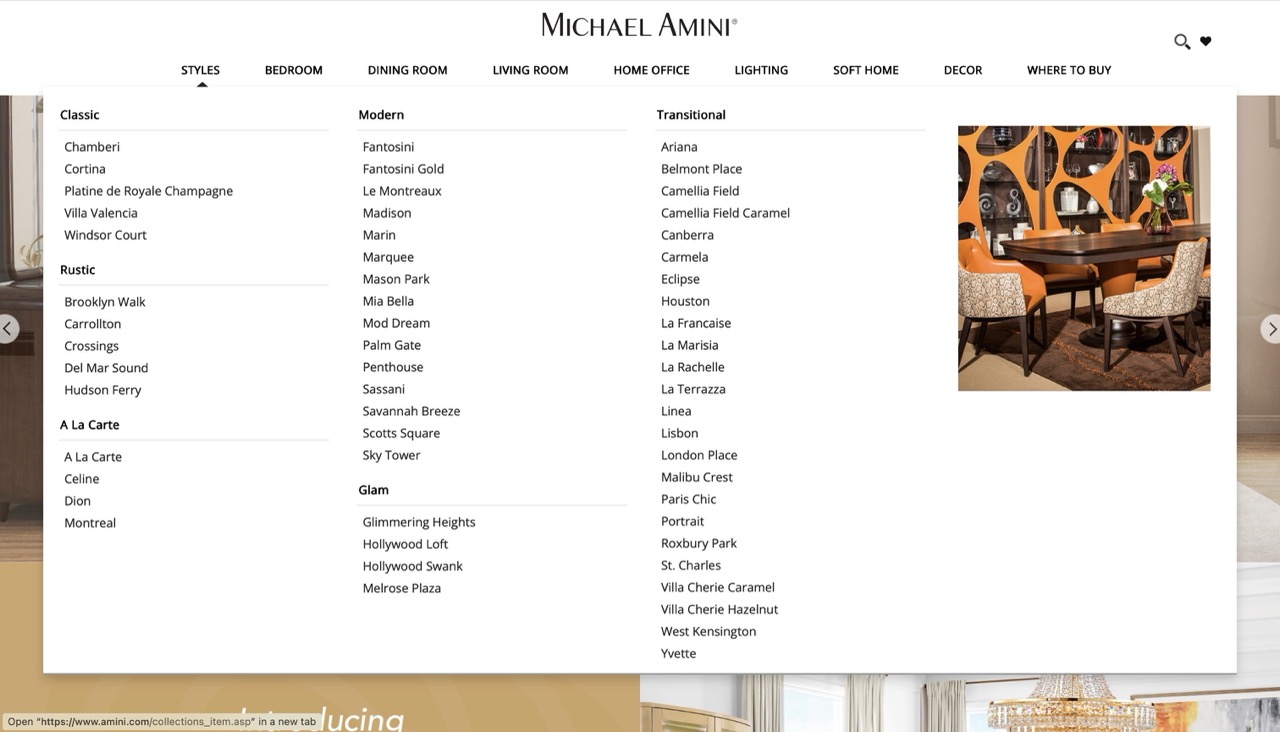
- Responsive Layouts: The legacy site interface merely scaled content linearly across devices causing a 48% mobile engagement drop, so the new platform needed proper responsive design with optimized layouts at specific breakpoints.
- Undocumented Legacy Infrastructure: A system reflecting 30+ years of growth with no standard operating procedures or architectural documentation, requiring constraint mapping and system analysis before any architecture decisions could be made.
- Multi-User Architecture: The new platform had to serve three distinct user types: internal staff, sales reps/retailers needing rapid information access, and browsing consumers, all under one unified architecture without confusing overlap.
- IT Security Protocols: IT had to handle all updates due to their server-first policy and concerns that non-technical employees could compromise the security of the complex, integrated platform.
- Marketing Independence: The Marketing department designed campaigns but couldn't update the platform independently, creating operational bottlenecks with IT that slowed new campaign launches.
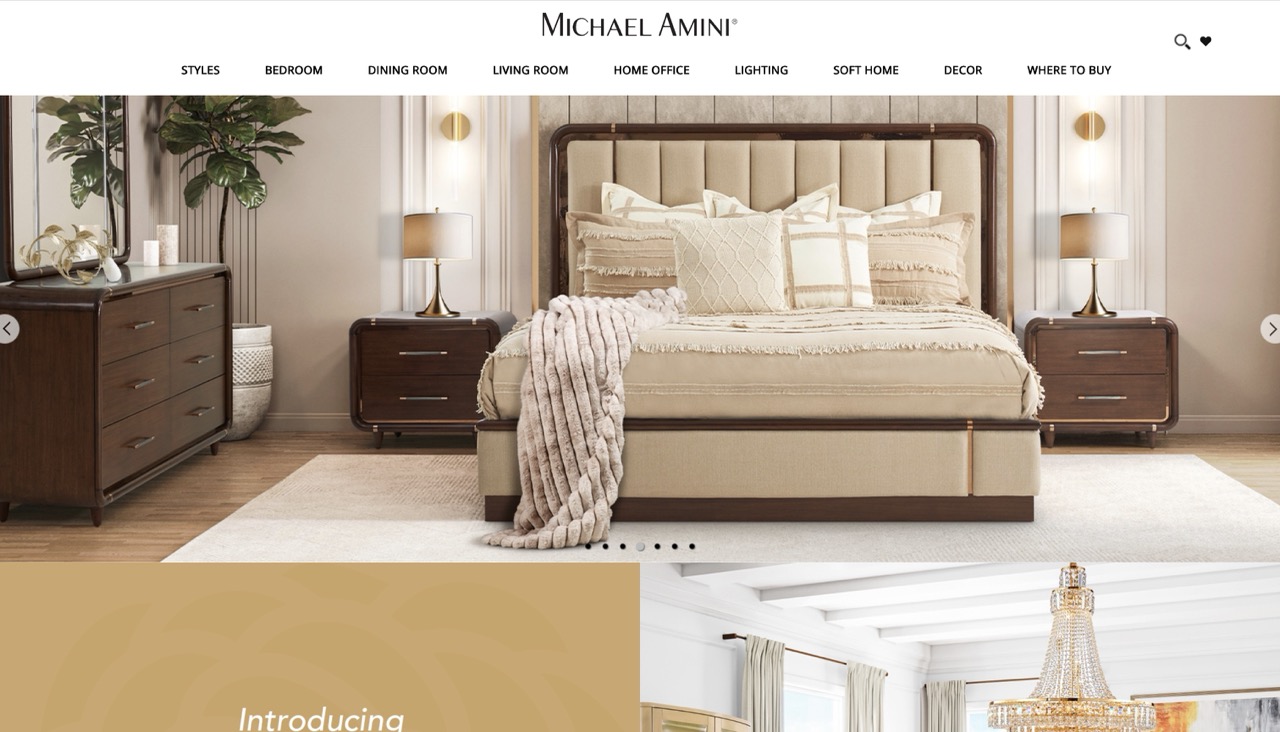
The Website Before:
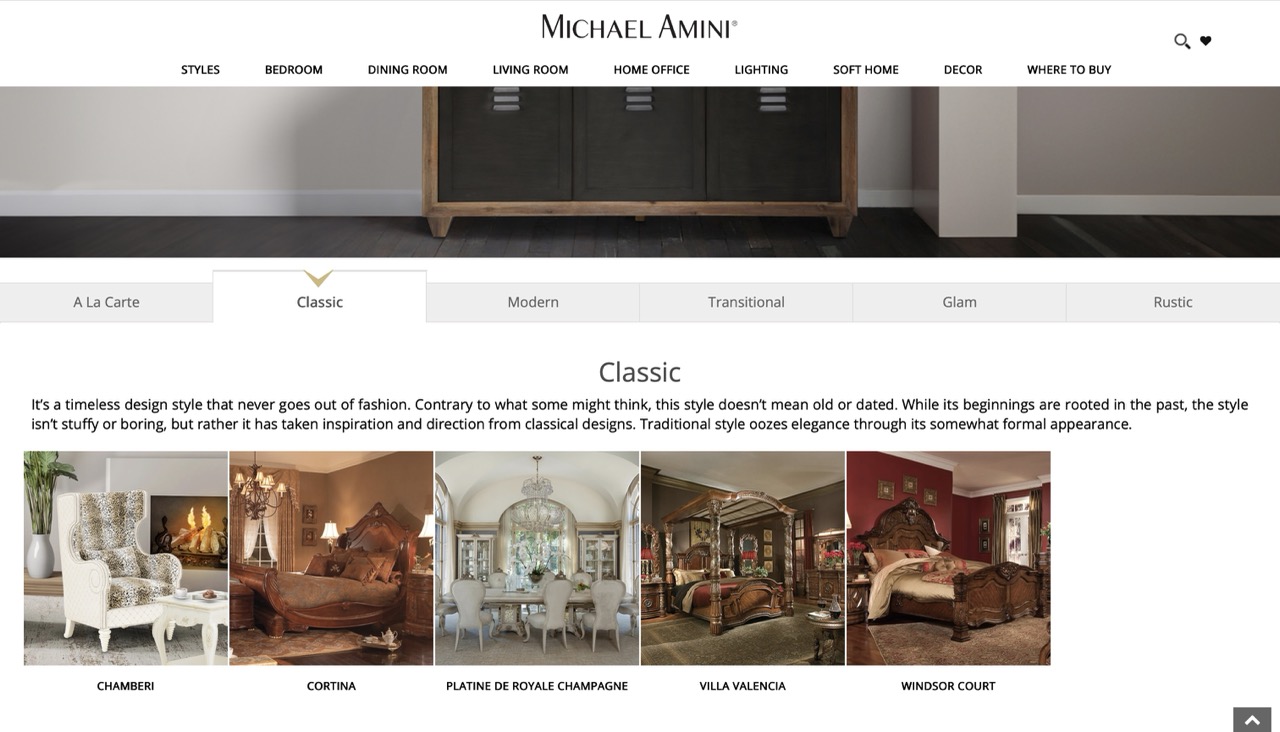
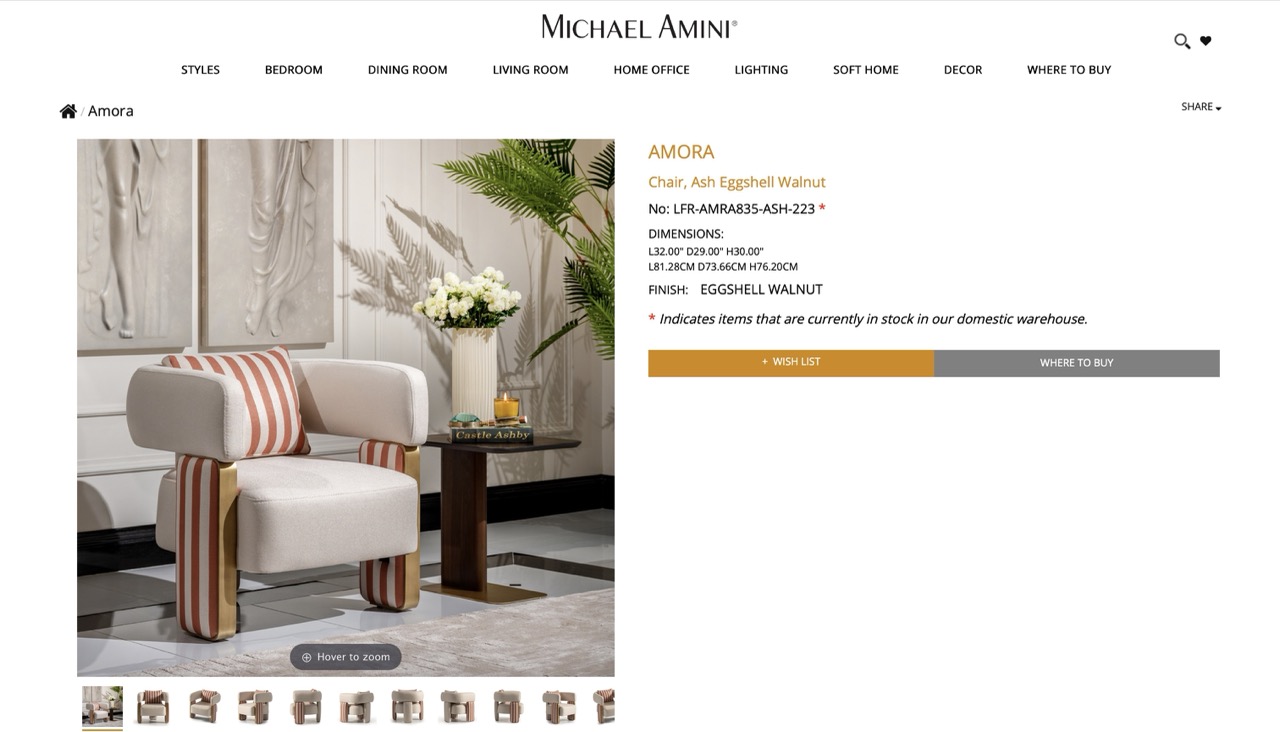
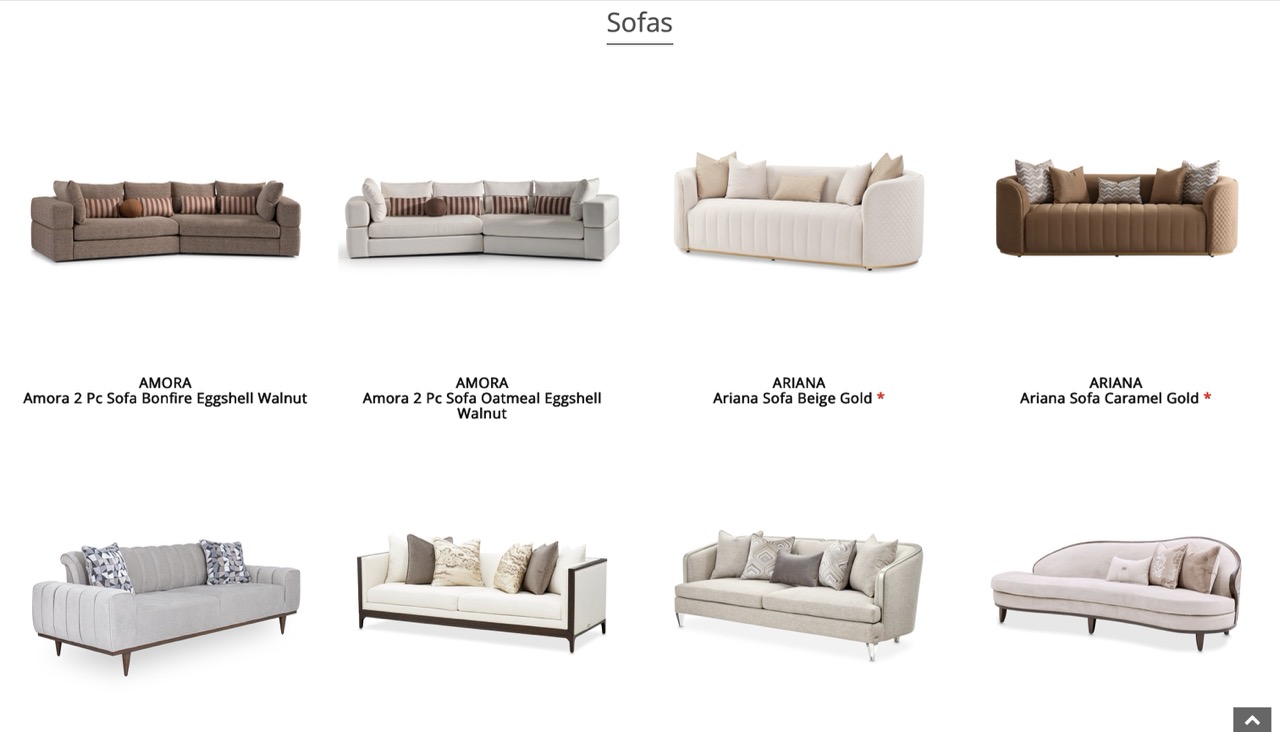
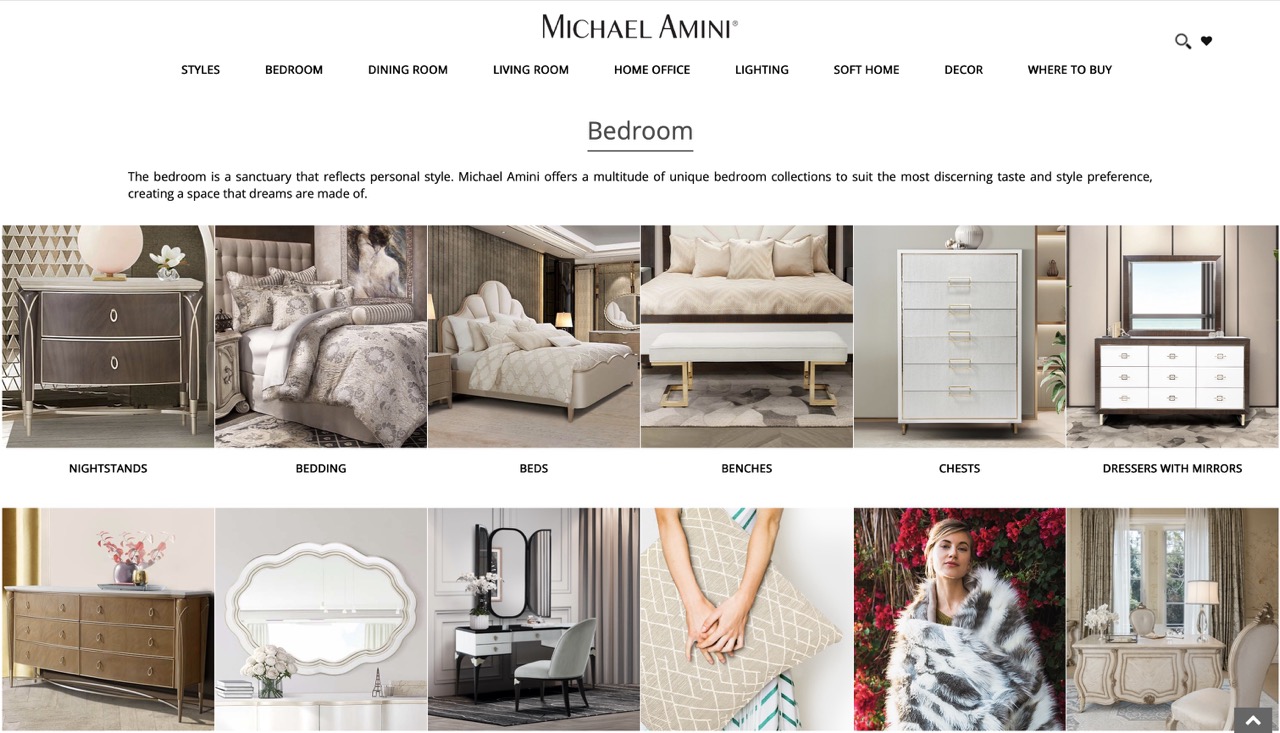
The Journey
There were four distinct phases: Stakeholder Alignment & Constraint Mapping, Multi-User Research, Architecture Development & Implementation, and Deployment and Optimization.
Alignment meeting with AICO executives. From left to right: Gabriel Duran (VP of Operations), Jeff Santanello (VP of Sales), David Koehler (President)
Stakeholder Alignment & Constraint Mapping
Stakeholder interviews across three organizational levels identified competing priorities between aesthetic requirements, budget constraints, and operational needs. Group alignment meetings established project parameters, while individual sessions with the IT Director and Product Information Manager provided system architecture details. Executive interviews confirmed the scope extended beyond UI updates to full integration architecture.
The technical assessment revealed a dual server environment with independent database feeds from the enterprise resource planning system and proprietary content management tools. While existing data connections showed solid engineering, the system reflected 30+ years of undocumented growth with no standard operating procedures or architectural documentation.
Constraint mapping identified IT security policies requiring on-premise solutions and workflow dependencies between departments. We explored cloud-based API integration, but security requirements necessitated a custom bridging solution to enable non-technical user updates while maintaining system integrity.
While in Florida meeting with B2B partners (e.g. Rooms To Go). Left to right: Me, Frank Lorenzo (Florida Sales Rep), Michael Amini (CEO), Kian Amini (Director of Sales), David Koehler (President)
City of Hope fundraiser at High Point Furniture Market in NC. Left to right: Dominic Hart (Vietnam QC Specialist), Kian Amini (Director of Sales), Me
Multi-User Research
Field research at High Point Furniture Market and other business trips expanded on Phase 1's internal staff findings by providing access to AICO's sales team and retail partners. Interviews with 50+ sales representatives and client meetings revealed three distinct user groups: internal AICO staff, sales representatives and established retail partners requiring rapid product information access, and prospective retailers/consumers needing comprehensive product browsing capabilities.
Google Analytics analysis revealed performance gaps including 81% homepage bounce rate with engaged users taking upwards of 30 seconds to determine next steps, and mobile users experiencing 48% shorter session durations due to linear scaling issues rather than responsive design.
Post-market surveys collected additional feedback from sales representatives after reflection periods. This research confirmed misalignment between the platform's navigation structure and users' task-oriented needs, with conversion barriers preventing productive business interactions across all three personas.
Technical Architecture Diagram
Architecture Development & Implementation
Non-Technical Summary
The challenge was enabling Marketing to update website design independently while keeping all backend systems working. AICO's website had thousands of products connected to their database and every design change required IT intervention due to the technical nature of their system.
I built a custom application that translates between a modern design tool and AICO's existing infrastructure. Marketing can now design, export their work, process it through the application, and swap in updated files without breaking product data or needing IT support. What used to take hours of coordination now happens in seconds with a simple file swap.
AICO internal employee training session.
AICO internal employee training session.
Deployment and Optimization
For pre-launch testing, we commandeered the Marketing conference room, set up devices of varying screen sizes, and held testing sessions over several weeks to find bugs and gather last minute feedback from internal AICO employees.
We used Google Analytics to identify the lowest traffic during business hours (8-9am and 4-5pm) for live server testing with the updated config file. After identifying caching conflicts during testing, we implemented versioning across all necessary files and adjusted caching preferences in the config to allow for updates to be accepted without conflict across users' machines.
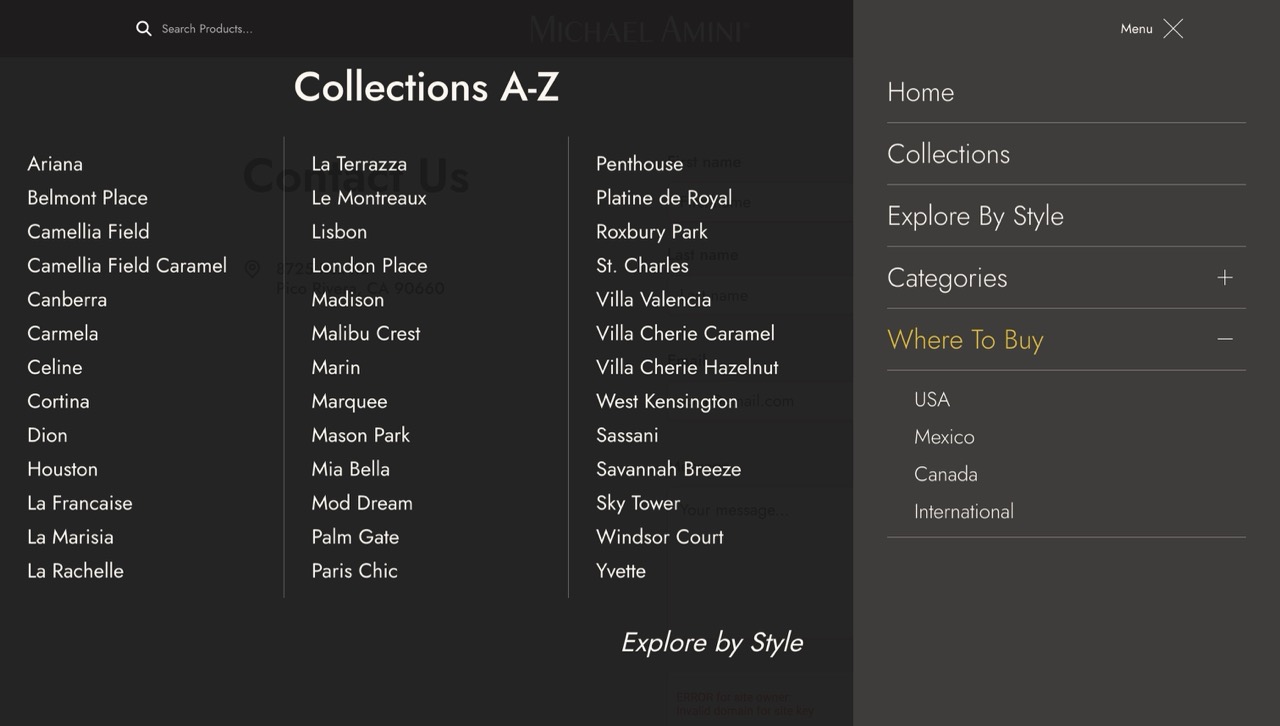
Due to prior canvassing, training, and testing, resistance to the new platform was minimal. There was slight resistance to the new “collection” page flow as to how it should be organized (A-Z or by style), but the data backing this update quickly prevailed.
Post-launch issues included contact form spam protections that needed tightening and last minute executive requests to add back features like the “decor” page flow that had been removed due to miscommunication. We used Clarity and Google Analytics to test performance against initial problem metrics (see metrics details in Results section).
Results
• Operational Savings: ~$90K/year redeployed through Marketing independence & faster campaigns
• Revenue Influence: ~$100K/month attributed ongoing impact (~5% of monthly sales)
• Homepage Bounce Rate: 81% → 52%
• Mobile Bounce Rate / Pages per Session: 73% → 47% / 1.8 → 2.4
• Purchase-Intent Traffic: +36%
• ROI: >50,000% vs. external vendor quotes
• Business Enablement: Non-technical staff updates content; platform ready for future integrations & growth
Platform modernization delivered measurable improvements across all performance areas identified during initial assessment:
• Homepage engagement: Bounce rate decreased from 81% to 52% after introducing a clear value proposition, streamlined navigation, and prominent call-to-action buttons. Average homepage session duration decreased from 24.6 seconds to 18 seconds, reflecting faster orientation and next-step clarity rather than abandonment.
• Mobile experience: Responsive architecture across 7 breakpoints resolved mobile usability issues. Mobile bounce rates improved from 73% to 47%, and pages per session increased from 1.8 to 2.4. Mobile session duration decreased slightly (104s → 98s), but analysis showed users completing tasks more efficiently rather than disengaging. Desktop metrics followed a similar pattern, with session duration decreasing (199s → 175s) but bounce rate dropping from 62% to 45%.
• Purchase-intent traffic: The “Where to Buy” page saw measurable growth after navigation placement was improved and the dealer locator was made more intuitive. Monthly purchase-intent page views increased from 3,600 to 4,900 (+36%).
• Organic search performance: Engagement from organic visitors improved from 68.5% to 78%, while the average session duration decreased slightly (142s → 131s) as visitors found key resources faster. Entry-to-action path length was reduced by an average of 1.2 clicks per session, demonstrating higher task efficiency.
The modernized platform delivered measurable operational improvements that translate to significant business value, though comprehensive revenue attribution requires longer-term data collection across multiple business channels.
Quantified Operational Savings:
Direct value creation totals approximately $58,500-65,000 annually through Marketing department independence. This represents an estimated 25 hours per week (at $45-50/hour) of cross-departmental support that can now be redeployed to higher-value work.
Additional efficiency gains include an estimated 120+ hours per quarterly marketing campaign, reflecting new capabilities that were previously unfeasible due to technical limitations and the length of time required. At standard organizational hourly rates ($45-50/hour), these improvements translate into $21,600-24,000 in annual capacity gains (4 campaigns × 120+ hours × $45-50/hour).
Total Annual Efficiency Gains: ~$90,000 in redeployed and more efficient operational capacity.
ROI Framework:
External vendor proposal for comparable modernization $350,000, while the implemented solution required under $1,000 plus $360 annual maintenance. This dramatic cost differential, combined with documented operational capacity gains and the performance improvements detailed above (52% bounce rate reduction, 36% increase in purchase-intent traffic, improved mobile engagement), demonstrates substantial business value.
Revenue Impact Assessment:
The platform facilitates approximately $24M in annual B2B sales through dealer networks (~$2M monthly). Documented improvements in purchase-intent traffic (+36%), mobile engagement (bounce rate 73%→47%), and streamlined sales rep workflows create sustained conversion lift across the buyer journey.
Conservatively attributing platform improvements as an ongoing influencing factor in approximately $100K/month represents roughly 5% of monthly platform-facilitated revenue. Given that the improvements address previously documented friction points across all three user groups (internal staff, sales reps, and consumers), this attribution reflects compounding efficiency gains.
While direct revenue attribution remains complex in B2B manufacturing environments with long sales cycles and multiple market factors, this estimate provides a baseline supported by measurable performance improvements that persist post-launch.
Internal feedback across departments has been positive. Marketing reports workflow independence and IT maintains security protocols with reduced support burden.
Third-party integrations are now achievable compared to the previous IT/Marketing bottleneck and inextricable system structure. System architecture enables the addition of new features/pages in hours versus previous weeks-long IT cycles. The solution positions AICO for future PIM systems, AI tools, and partner API integrations that were architecturally unfeasible prior.
The platform now supports capabilities beyond the original scope, and AICO has the technical foundation to adapt to emerging furniture industry technologies and market demands.
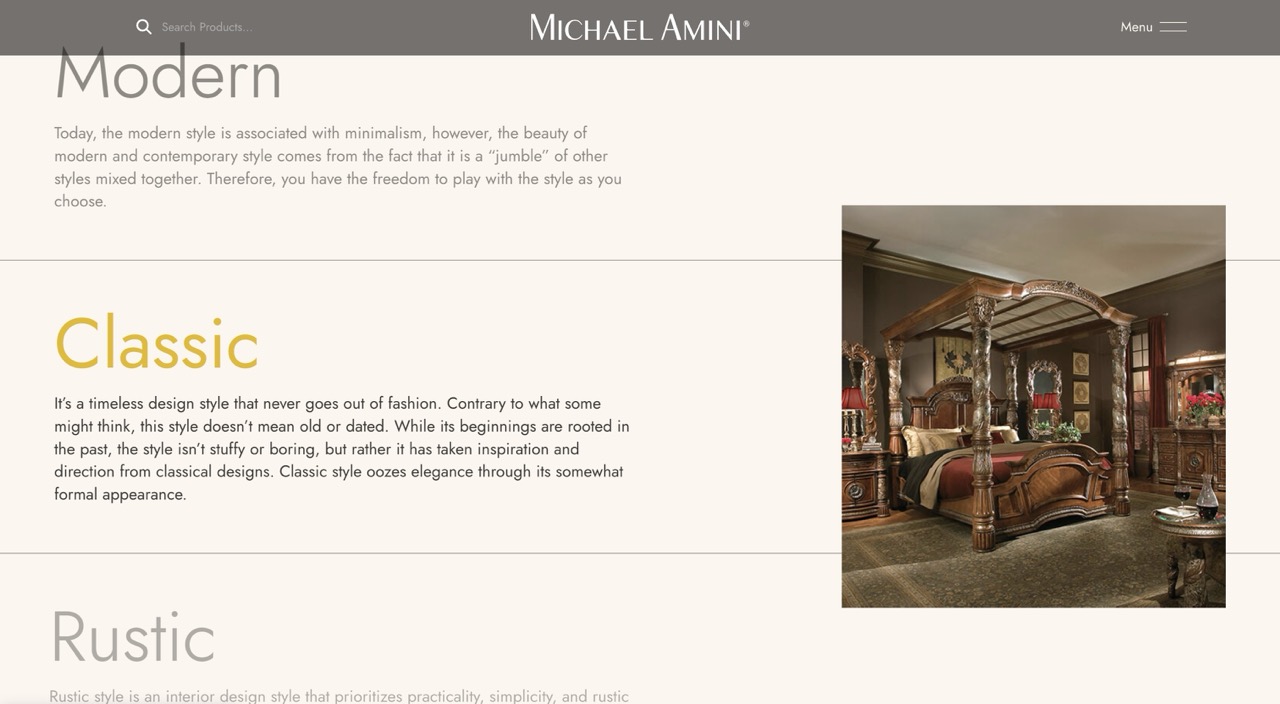
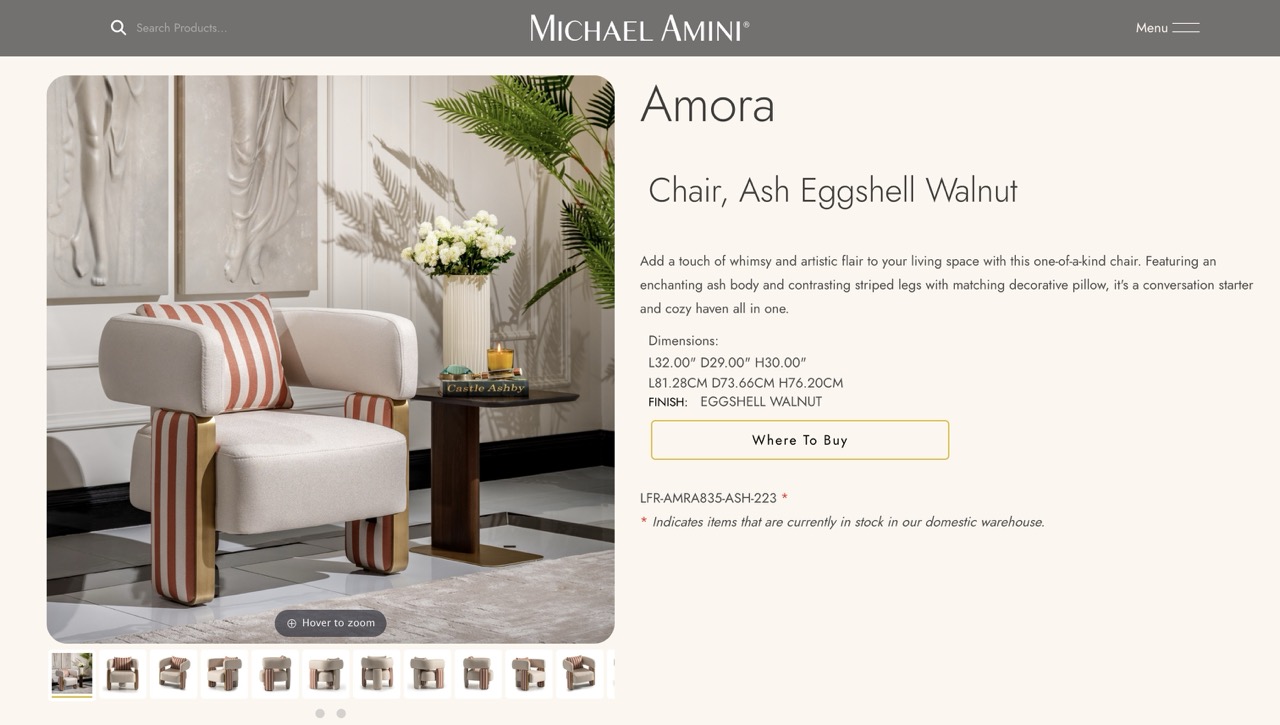
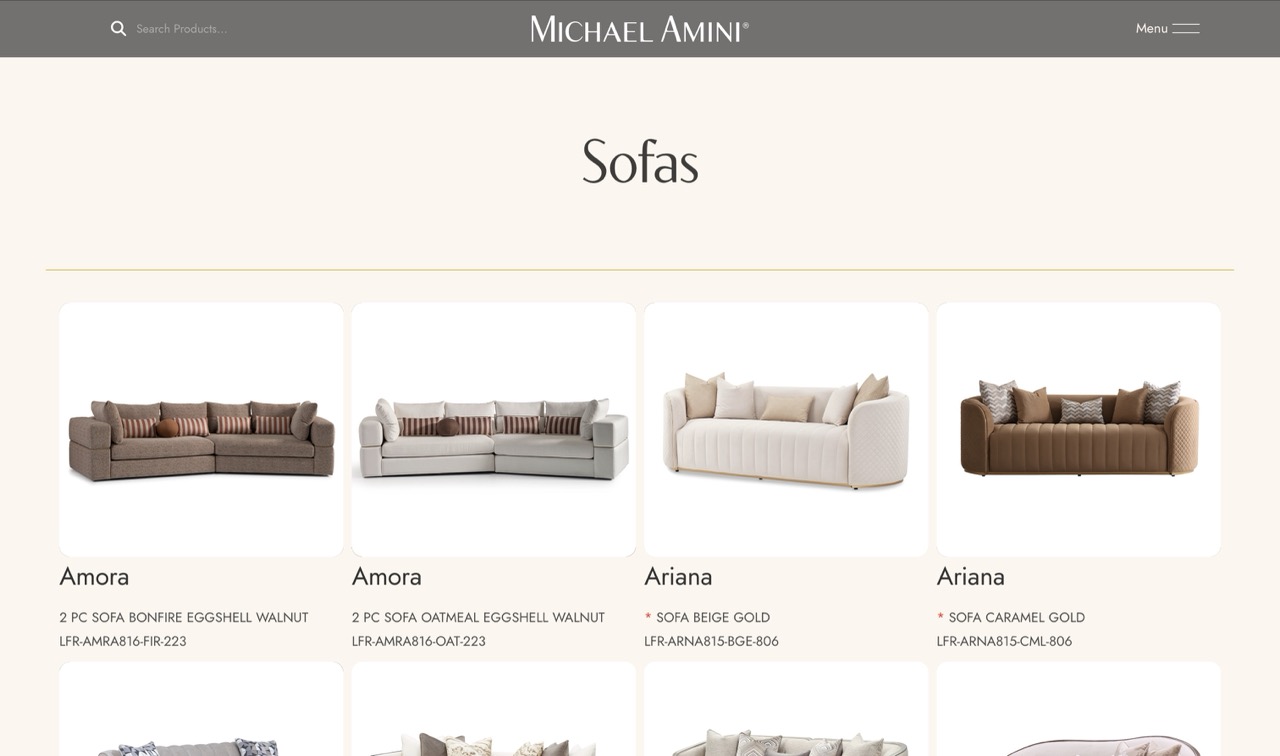
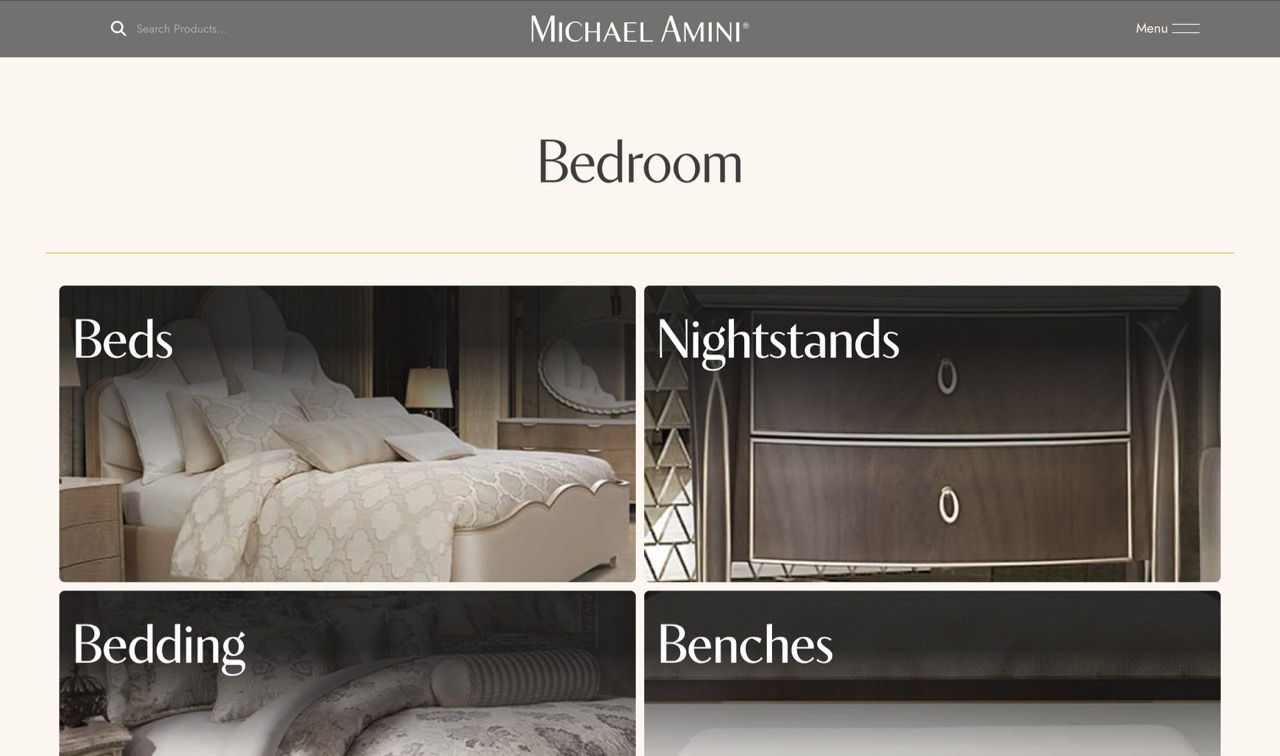
The Website After:

Reflections
I had the opportunity to combine many different types of tasks in this project and enjoyed it precisely because it was so multifaceted. One day I was conducting research and proving architectural concepts, another day aligning departments, and the next getting lost in brainstorming new solutions or coding. Yet this autonomy made me assume I knew what was best more often than I actually did.
There were many small instances where I made decisions that I later had to refactor. These things were small, and usually interface-related, but they added up and could have been avoided if I requested feedback first. I also would have reviewed third-party service agreements before building the integration application. I was set back about one week when I discovered my web-scraping approach violated terms.
Perhaps my biggest blunder was not implementing versions on css files to account for caching on users' machines. Amidst the complexity of the project, I failed to account for local cached versions of the old site on users’ machines.
In hindsight, I should have collaborated more throughout. Even when I had cross-departmental alignment on major decisions, I should have sought more feedback on specific technical details and seemingly small implementation choices rather than assuming I knew what was best.
Recognition
Receiving award from Jeff Santanello (VP of Sales)
The Rising Star Award
In large part due to this project, I received the 2025 Rising Star Award after 10 months tenure (typically requires 1+ year). Recognized for cross-functional impact spanning IT, Sales, Operations, and Marketing, including process improvements and company brand positioning.
“In just one year, Baer Lanfried has made an extraordinary impact on our brand, our operations and the overall energy of our company... By reimagining our website, Baer didn’t just modernize our image, he elevated how we present ourselves to the world.”
– Jeff Santanello (VP of Sales)